Sedona
Red Rock Country

The Western flick. Cowboys and Indians. Railroads, gold rushes, and saloons. Cinema that immortalized this bygone era often depicted the West as a place where a man could go out and start anew, beholden to none, and pull himself up by the bootstraps. The truth, however, is often messy.
Cowboys are indisputably the ultimate romanticized element of the West. What could be more American than a rugged, white cowboy? In reality, many cattle drivers were Spanish or Mexican, bringing with them loanwords such as lasso, rodeo, and ranchero. Furthermore, in this male dominated profession, homosexuality was practiced quite frequently under the stars of the midnight ranges.
Johnny Guitar (1954) is one of a few Westerns to have transcended the trite stereotypes that captured the imaginations and wallets of American cinema-goers. Released during the height of the Western craze, its extravagant colors, poetic dialogue, and operatic melodrama confused comtemporary American audiences. The more refined, intellectual Europeans, on the other hand, were able to grasp the movie’s true colors—an unconvential Western, woven with complicated subtexts and ambiguities that were far before their time. The movie’s opening song was later covered by Peggy Lee, and heard on radios throughout the Mojave in Fallout: New Vegas (2010).
One of the key reasons for the films success was combination of setting and the tasteful use of a newfangled technolgy of the time: Trucolor. A sea of blue skies painted with cumulus clouds, casting shadows upon the valleys. The enchanting red mountains stretching vastly into the distance. Rock formations, jutting out proudly from the mountainside—calling out for your eye’s undiluted attention. Sage brush and pine, spackling the face of the Earth. Johnny Guitar enchanted its viewers with the natural beauty of Sedona.

Mescal Trail
A kind breeze caressed the four of us as we hit the trailhead. The trail wove itself neatly through unalderated desert nature—spiny octotillo gently swaying, each adorned with brilliant clusters of crimson flowers; crickets singing a lingering choral verse, shrouded in the juniper trees; pure, cool-to-the-touch desert air underneath a cloudless, morning sky.
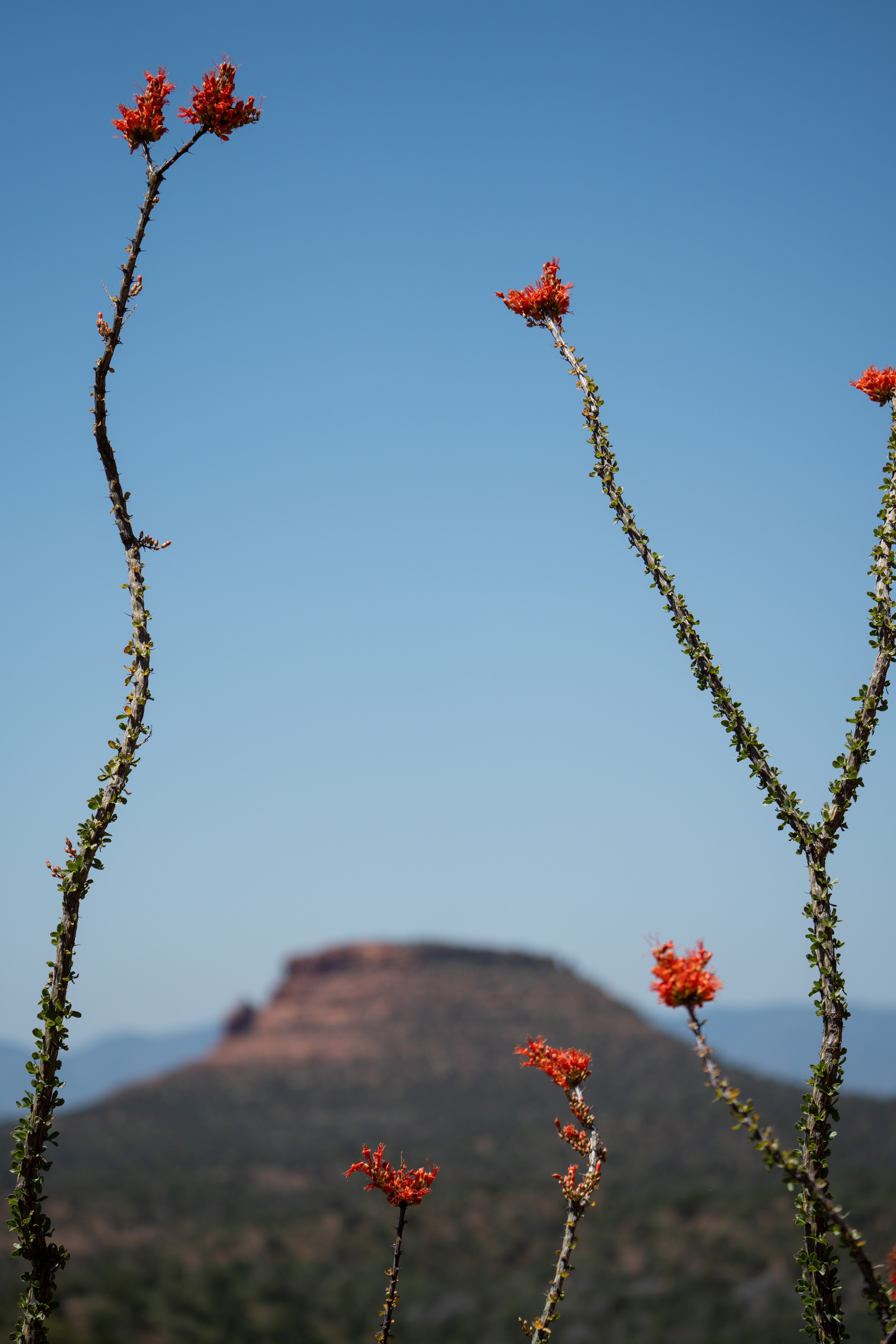
My desire to shoot photographs consequently found me lagging behind the others. It was serene: my camera and I, a beautiful hike. Suddenly, a streak of yellow caught my eye.
Typically, on photography outings, I try to limit the number of photos I shoot. With a 128GB SD card, I could potentially shoot 3200 photos before needing to consider space complexity. The idea that you have limitless space to shoot means there are no consequences to missing—the antithesis to film photography. With film, the photographer needs to physically carry their rolls. If you were only given twelve shots, you would want to make each one count.
This ideology flew out the window when I spotted a large yellow butterfly.

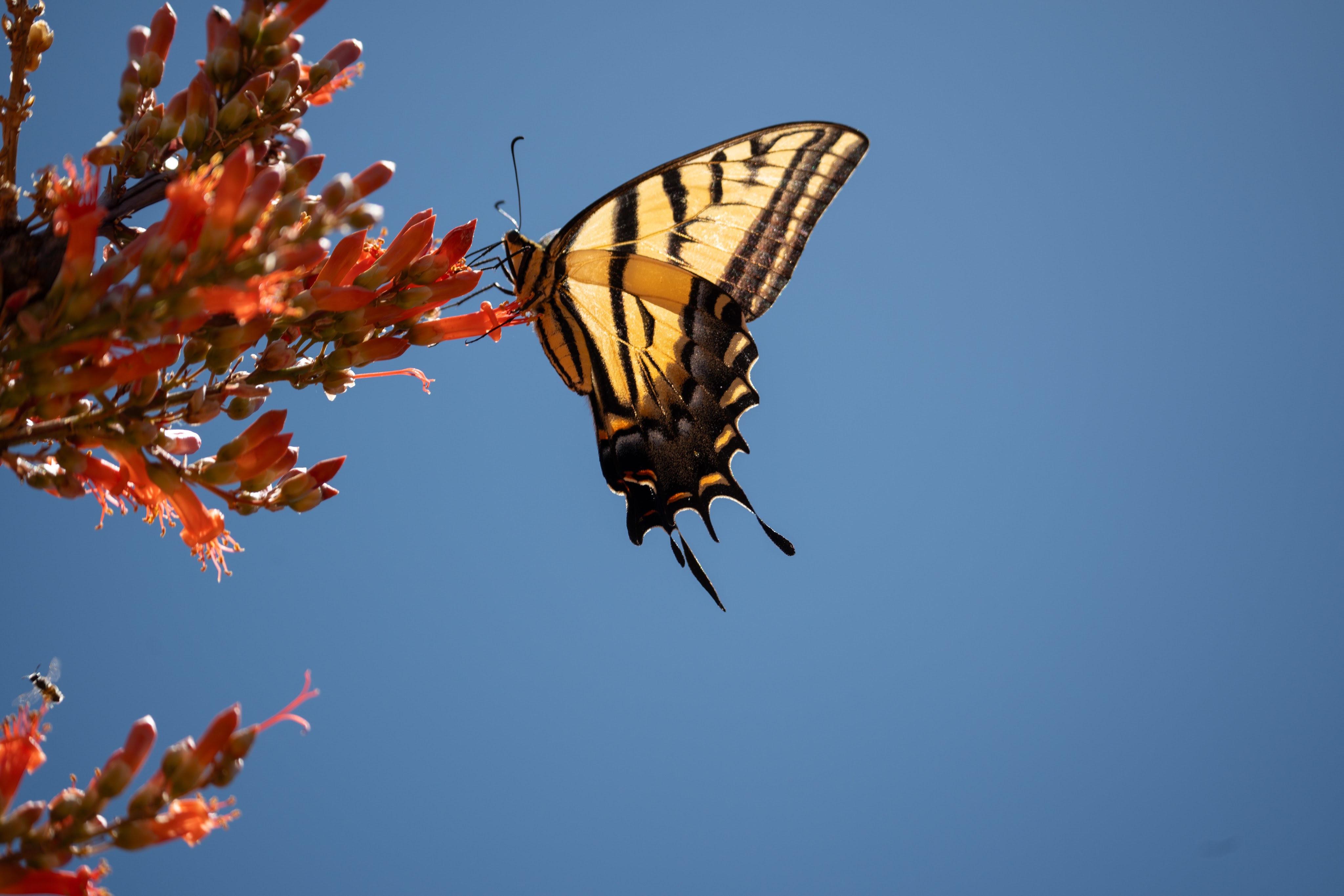
The strike rate for keepers was close to 30 to 1. This was my second outing with the Tamron 150-500mm F/5-6.7. I was dancing around on uneven ground surrounded with cacti and dead brush, tilting and balancing the camera at odd angles, counterbalancing the weight shift of the lens’ external zoom, frantically chasing my subject like a lunatic paparazzo.
Hard Pics vol. Sedona


Herpetology
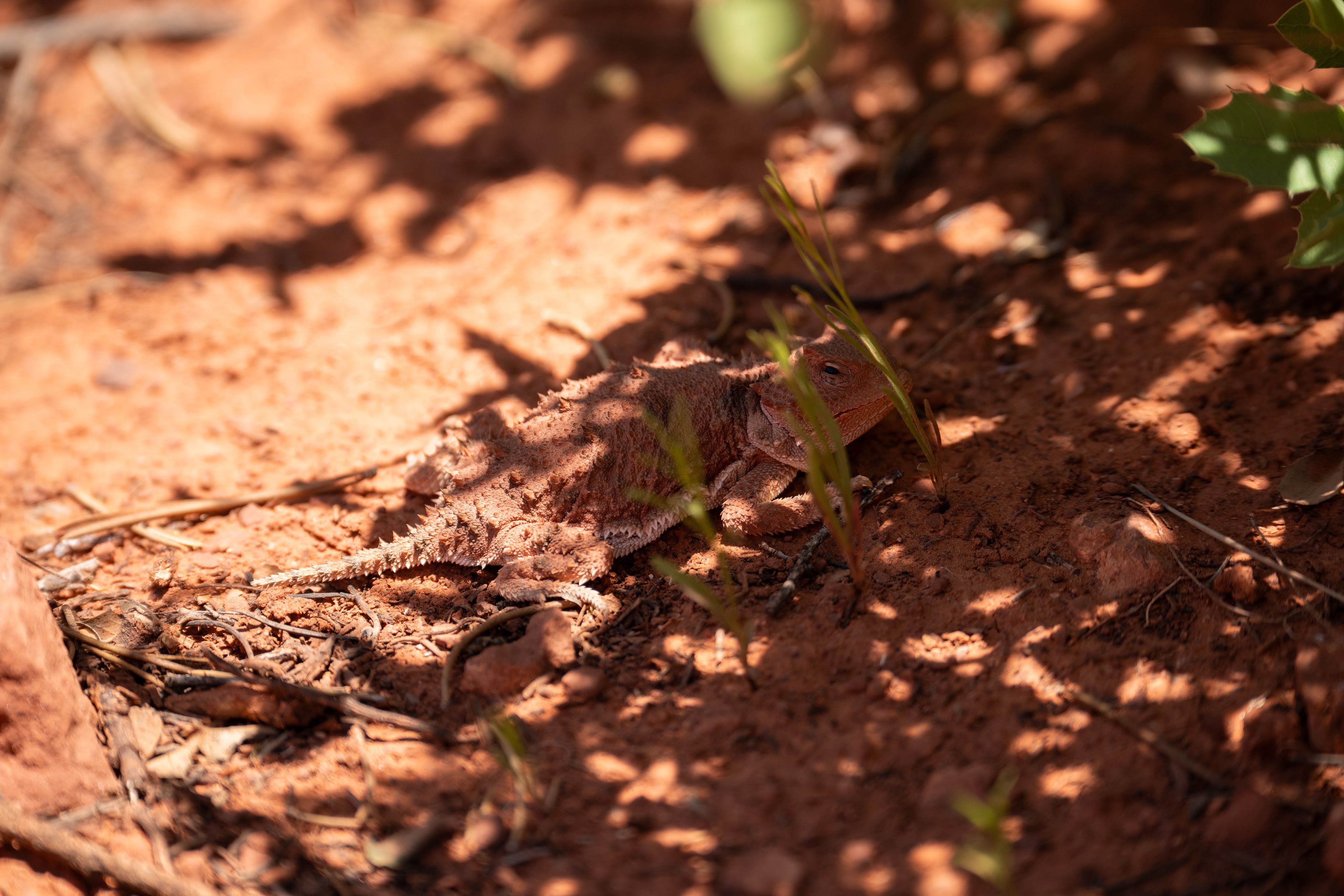
I will preface this section with a disclaimer: I am no herpetologist, I am not versed in reptile law. While backtracking from the hike, we stumbled upon a juvenile short-horned lizard. He scowled quite petulantly, as though I was inconveniencing him by taking his photo—eyeing me with ire. Remarkably, in his eye, you could just barely make out the silhouette of someone taking a photo.


 David McCormick
Leave a comment